Genesis
Four movements: the world, the family, the wrestler, the dreamer.
An introduction · Genesis 1–50The book of beginnings+
Genesis is the first book of the Bible, and the word means beginning. It is the book of origins: of the world and the sky and the sea, of humanity, of work and rest, of the first wrong and the first death, and of the family through whom the rest of the story will come. Almost everything the Bible says later starts somewhere in here.
It comes in two parts. Chapters 1 to 11 are about everyone, the whole human story painted in broad, deep-time strokes: creation, the garden, Cain and Abel, the flood, the tower of Babel. Then from chapter 12 the lens narrows to one family across four generations, Abraham, Isaac, Jacob, and Joseph, and follows them all the way down to the end.
The story runs from the first light over the waters to a coffin in Egypt: a world made and broken, a promise made to one old man, and a family carried through famine and betrayal toward a homecoming that has still not arrived when the book closes. From beginning to end it is one long story about a blessing, and what keeps happening to it.
Movement 1 · Genesis 1–11The primeval historyThe whole world: made good, gone wrong, the wrong spreading outward, until one grasped name at Babel is answered by one given name in Abraham.+
The ground beneath the primeval historyThe situation+
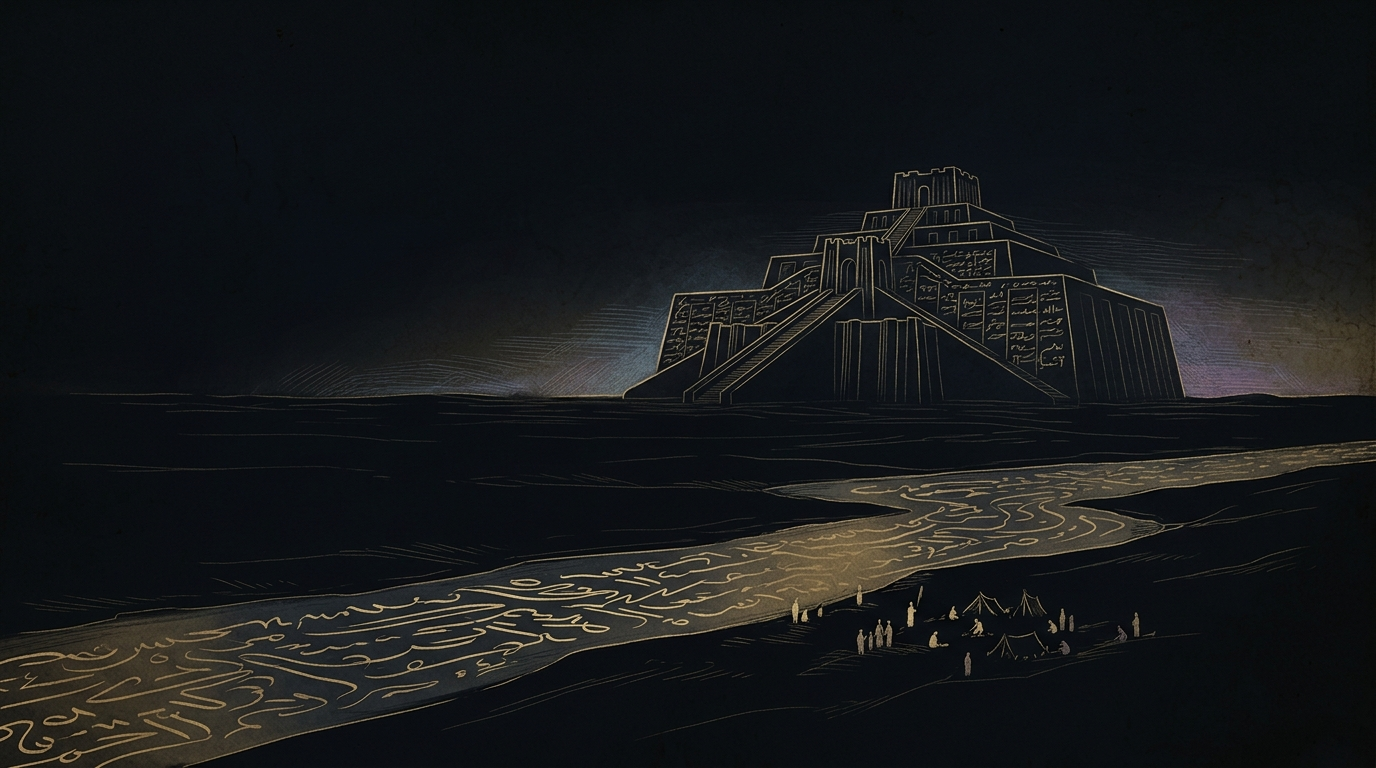
The primeval history was given its shape by Judean priests and scribes in exile, after Babylon stormed Jerusalem and burned its temple in 586 BCE and marched its people east. They had lost the temple, the land, the king. Around them stood the greatest empire on earth, with its own towering myths: a world made through a war of gods, humanity formed to be the gods’ slaves, Babylon the navel of creation.
These writers took older traditions of their own and edited them into a quiet answer. Not an argument shouted, but a story told. One God, who makes by speaking, who calls it good, who forms the human in his own image rather than as a slave. Two older sources run all through it, the vivid Yahwist and the ordered Priestly, woven together rather than smoothed into one.
Chapters 1 to 11 are a single movement. They open by answering Babylon and they close at Babel, which is Babylon again, named and scattered, just before the story narrows to one family and the promise made to it.
One honesty about the dates. The events these chapters reach for, creation, the flood, Babel, sit before history, in deep time that cannot be dated. What can be pinned is not the story but the desk it was written at, and the older myths it was written against.
- c. 1800 BCE
- The Sumerian King List records kings reigning tens of thousands of years.
- c. 1100 BCE
- Babylon’s Enuma Elish and the Epic of Gilgamesh carry the myths Genesis will answer: creation by war, a great flood.
- 586 BCE
- Babylon burns Jerusalem and its temple. The exile begins. This is the desk these chapters are written from.
- 539 BCE
- Persia takes Babylon; the exiles are allowed to go home.
- c. 450 BCE
- The traditions reach their final, edited shape.
- CreationGenesis 1 · Seven daysNarrative
- The gardenGenesis 2 · Four scenesNarrative
- The serpentGenesis 3 · Five scenesNarrative
- Cain and AbelGenesis 4 · Five scenesNarrative
- From Adam to NoahGenesis 5 · One sceneNarrativeGrounded
- The flood beginsGenesis 6 · Four scenesNarrative
- The floodGenesis 7 · One sceneNarrativeGrounded
- The waters recedeGenesis 8 · One sceneNarrative
- Noah’s covenantGenesis 9 · Four scenesNarrative
- The table of nationsGenesis 10 · One sceneNarrativeGrounded
- BabelGenesis 11 · Three scenesNarrative
The flood had already narrowed to one family, Noah’s, but that was still a story about all humanity, with Noah only the thread it survived on. Here the change runs deeper. The story stops being about everyone and settles on one man, and it will stay with his family from now on. God calls Abram out of everything that defined him, country, kin, and father’s house, and makes him a promise with no collateral but his own word.
Where Babel grasped at a name, Abram is given one. The cure for the broken world begins here, with a single act of trust and a long, imperfect walk toward something he will never fully see.
Movement 2 · Genesis 12–25AbrahamA promise made to a childless old man, held against every impossibility and every attempt to force it, until it arrives as laughter and is then asked back on a mountain.+
The ground beneath the Abraham storyA family memory, told long after+
The stories of Abraham are set in the Bronze Age but were written down much later, and they carry small anachronisms, domesticated camels, Philistines, that point to the hand of later tellers shaping an old memory.
Much of the cycle works as a family origin story for a whole region: where Moab and Ammon came from, where the Ishmaelite tribes came from, why Israel and its neighbors are kin and rivals at once.
And one note runs under all of it for the people who edited it. Abraham came out of Mesopotamia, out of Ur and Harran, on nothing but a promise, and walked toward a land he did not yet have. To exiles who had been carried off to Babylon, that was not ancient history. That was their own road, read backward.
- The call of AbramGenesis 12 · Three scenesNarrative
- Abram and Lot partGenesis 13 · One sceneNarrativeGrounded
- The kings and MelchizedekGenesis 14 · One sceneNarrativeGrounded
- The covenantGenesis 15 · Two scenesNarrative
- HagarGenesis 16 · Two scenesNarrative
- CircumcisionGenesis 17 · One sceneNarrativeGrounded
- The visitorsGenesis 18 · Two scenesNarrative
- SodomGenesis 19 · Two scenesNarrative
- Sarah and AbimelechGenesis 20 · One sceneNarrativeGrounded
- Isaac bornGenesis 21 · Two scenesNarrative
- The binding of IsaacGenesis 22 · Two scenesNarrative
- Sarah’s deathGenesis 23 · One sceneNarrativeGrounded
- A wife for IsaacGenesis 24 · One sceneNarrativeGrounded
- Abraham’s deathGenesis 25:1–18 · One sceneNarrativeGrounded
Abraham is buried, and the promise passes down: to Isaac, quiet and almost passive, and then to his sons, where it gets interesting again.
The question changes here. With Abraham it was, will the promise ever come? With Jacob it becomes, what kind of person can carry it? Because the next man to hold it is a deceiver from the womb, a heel-grabber who cheats his brother and tricks his father, and grace lands on him before he has done one thing to deserve it.
The God who chose an old man for his faith now chooses a younger man for no visible reason at all, and that is the scandal the Jacob story is about.
Movement 3 · Genesis 25–36JacobA grasper takes the blessing by fraud and spends twenty years being humbled into it, until a night of wrestling leaves him renamed and limping, and the brother he cheated runs to embrace him.+
The ground beneath the Jacob storyHow two nations remember a shared womb+
The Jacob cycle is, among other things, a family explanation of a map. Jacob is Israel; his twin Esau is Edom, the rival just to the southeast; Laban and his daughters stand for the Aramean kin to the northeast. The quarrels in the tents are the quarrels between peoples, told as one fractious household.
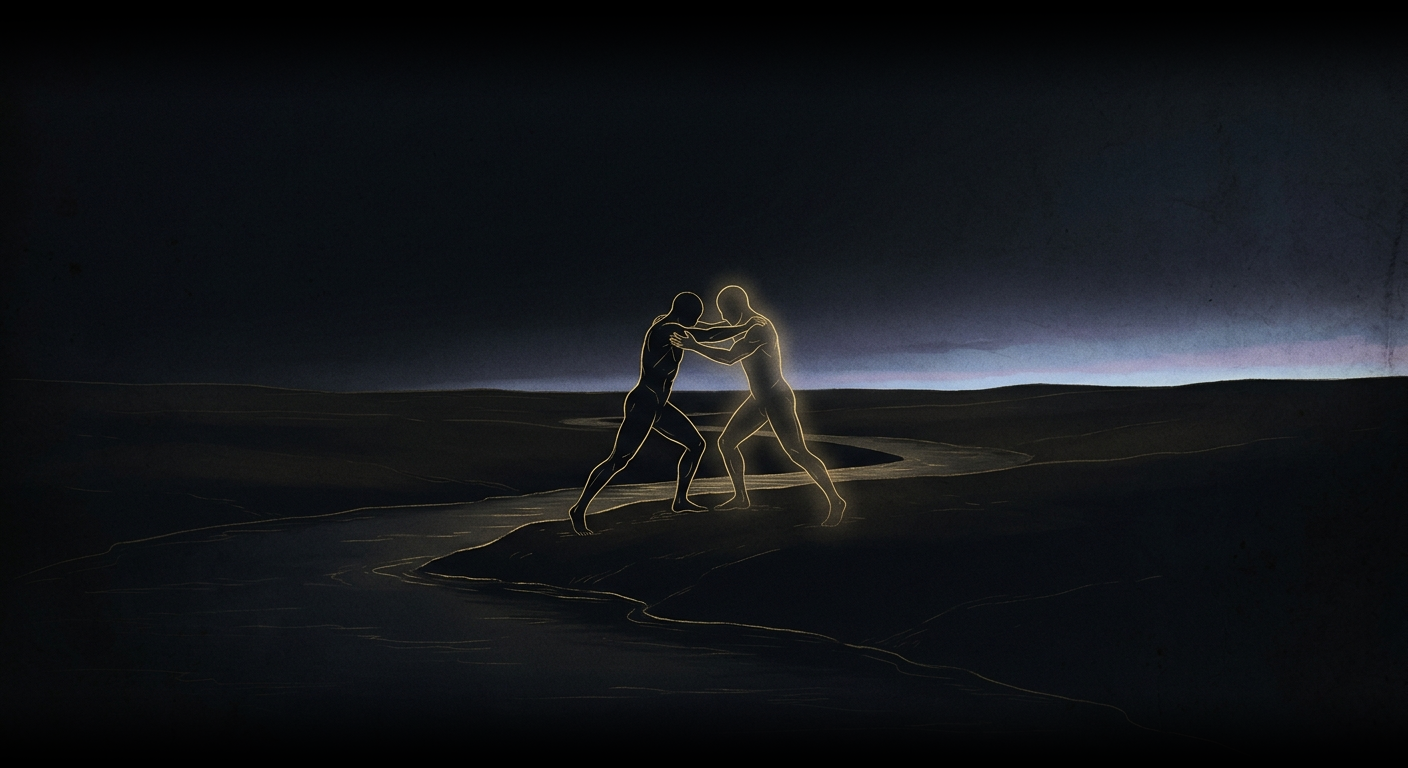
It is also the most morally tangled stretch of Genesis. The hero is a deceiver who grasps from the womb, and the story never tidies him up. It lets grace fall on a man who has done nothing to deserve it, then spends the whole cycle wearing him down, deceived in turn by Laban, until the trickster is finally broken open in the dark by a river.
For the exiles who shaped it, the shape would have been familiar to the bone: a man driven from home, made to serve a hard master in a far country for long years, and brought back at last to the land he was promised. Jacob’s road out and home is Israel’s own road, read backward.
- Jacob and EsauGenesis 25:19–34 · Two scenesNarrative
- Isaac and the wellsGenesis 26 · One sceneNarrativeGrounded
- The stolen blessingGenesis 27 · Two scenesNarrative
- The ladder at BethelGenesis 28:10–22 · One sceneNarrative
- Leah and RachelGenesis 29 · Two scenesNarrative
- The rival wivesGenesis 30 (selected) · One sceneNarrativeGrounded
- Leaving LabanGenesis 31 (selected) · One sceneNarrativeGrounded
- Wrestling at the JabbokGenesis 32:22–32 · One sceneNarrative
- The reunionGenesis 33 · One sceneNarrative
- DinahGenesis 34 · One sceneNarrative
- Back to BethelGenesis 35 (selected) · One sceneNarrativeGrounded
- The line of EsauGenesis 36 (selected) · One sceneNarrativeGrounded
Jacob is Israel now, and the camera, which has followed one man, widens to take in his twelve sons, the tribes to be. But it narrows again almost at once, onto one boy: Joseph, the favored son, the dreamer in the coat his father should have known better than to give him.
The question shifts once more. With Abraham it was, will the promise ever come? With Jacob, what kind of person can carry it? With Joseph it becomes, what is God doing in the wreckage, when the brothers who hated their father’s favoritism throw the favored son into a pit and sell him into Egypt, and no voice from heaven says a word for thirteen years.
The deceit that has run through three generations is about to be done to Jacob one last time, by his own sons, with the same prop, a brother’s bloodied coat. And the answer the next movement gives is the strangest in Genesis: not a rescue, but a long, hidden providence that works through the betrayal rather than around it.
Movement 4 · Genesis 37–50JosephThe favored son is thrown in a pit and sold into Egypt, rises and falls and rises again by reading dreams, and at last faces the brothers who betrayed him and chooses to read the whole wreckage as a providence that meant it for good.+
The ground beneath the Joseph storyA different kind of story, told to exiles+
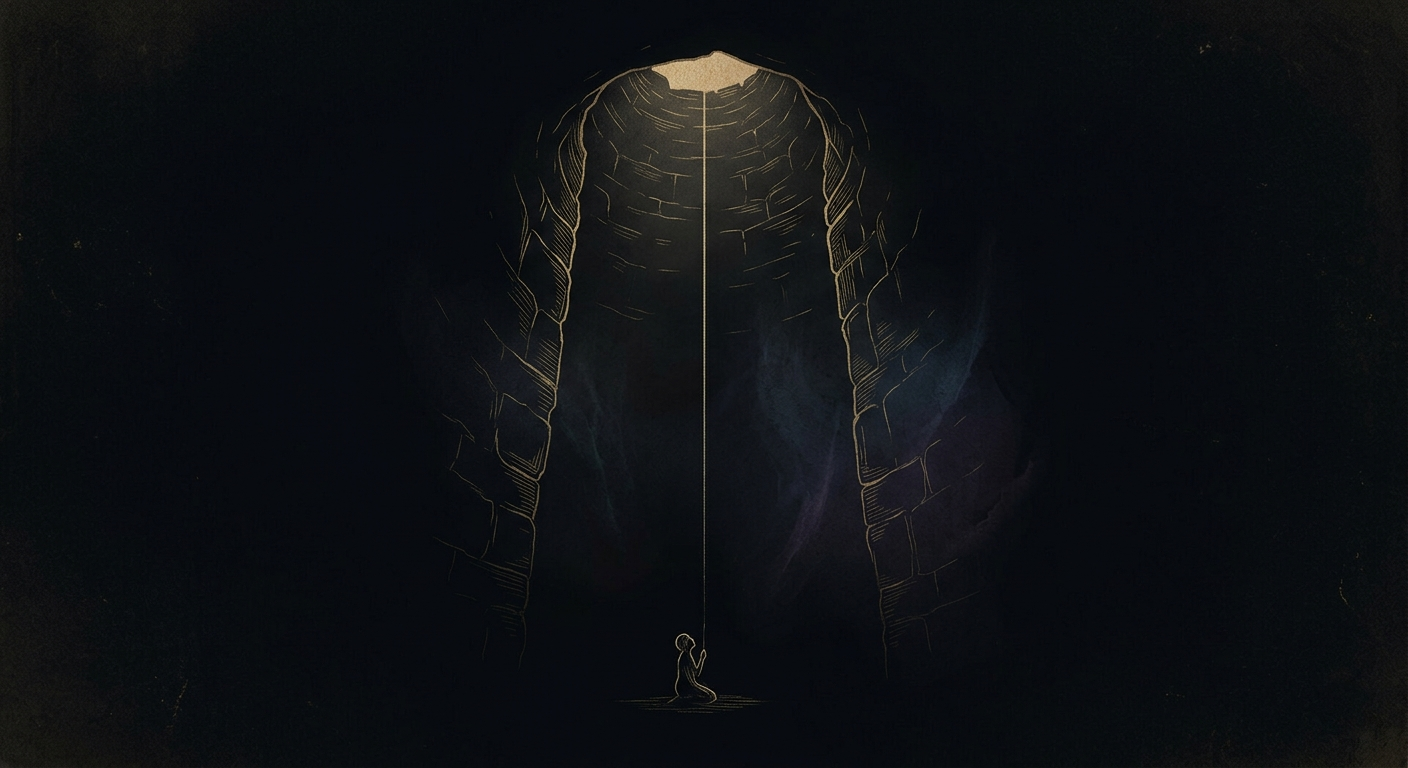
The Joseph narrative reads unlike anything before it in Genesis. It is one long, artfully built novella rather than a chain of episodes, a single plot running unbroken from the pit to the deathbed, its foreshadowing and reversals and recognitions all worked out with a novelist’s control.
And God acts in it differently. There are no more night visions or voices from the fire, no walking in the garden in the cool of the day. For chapters at a stretch heaven is silent, and the providence is hidden inside ordinary events, a sold slave, a false charge, a forgotten promise, a famine, until at the very end a single character names what was going on underneath all along.
For a people who had themselves been carried off to Egypt and Babylon, a story about an Israelite enslaved in Egypt, who rises in a foreign court, keeps his family alive through catastrophe, and insists that God was at work in the disaster the whole time, was not a tale about the distant past. It was a way to read their own exile, and to dare to trust it.
- Joseph soldGenesis 37 · Two scenesNarrative
- Judah and TamarGenesis 38 · One sceneNarrative
- Potiphar’s wifeGenesis 39 · One sceneNarrative
- The cupbearer and the bakerGenesis 40 (selected) · One sceneNarrativeGrounded
- From the pit to the palaceGenesis 41 (selected) · One sceneNarrative
- The brothers comeGenesis 42–44 · Two scenesNarrative
- I am JosephGenesis 45 · One sceneNarrative
- Down to EgyptGenesis 46–47 (selected) · One sceneNarrativeGrounded
- The deathbed blessingsGenesis 48–49 (selected) · One sceneNarrativeGrounded
- You meant it for evilGenesis 50 · One sceneNarrative