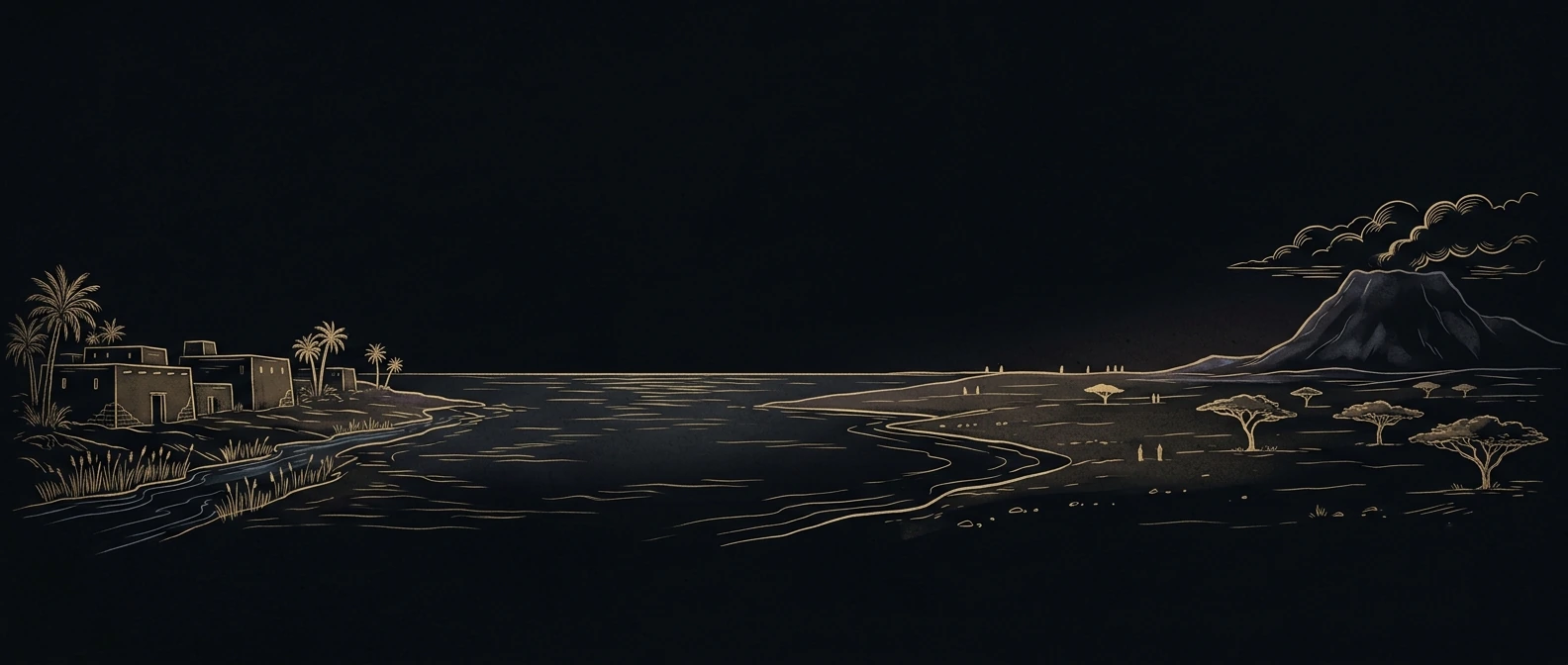
Exodus
Four movements: out of Egypt, the road, the covenant, the presence.
An introduction · Exodus 1–40The book of the going out+
Exodus means the going out, and it is the book where a family becomes a nation. It moves through three kinds of writing: a rescue told as story, a covenant given as law, and then, for nearly a third of its length, instructions for building a tent. Readers who arrive for the sea and the mountain are often surprised by how much of the book is joinery.
It is a composite book, and it does not hide it. More than one telling runs through it, sometimes laid side by side without being reconciled: Moses is called twice, in two different voices, and the crossing of the sea is described both as a wind blowing all night and as water standing up like walls. The Song at the sea is in an archaic Hebrew centuries older than the prose around it. It reached its final shape long after the events it describes, among people carried off to Babylon who knew what it was to live inside an empire.
Then the question most readers arrive with. No Egyptian record mentions the departure, and Egypt kept careful records of far smaller things. Nothing has been found in Sinai from a mass migration, and the archaeology of Canaan points to Israel emerging largely from within it rather than arriving from outside. On the most widely held reconstruction, the exodus as the book narrates it, on that scale, did not happen. (Finkelstein and Silberman.)
The serious case on the other side is worth hearing rather than waved past. The book carries Egyptian detail a later Judean writer had little reason to know, several of its names are Egyptian, including Moses, and no nation invents for itself an origin in which its ancestors were slaves. On that reading something happened to somebody, smaller than the telling, and the telling grew around it. (Hoffmeier.) The argument is genuinely open. What is not in question is what the story became: the founding memory of the people who kept it, and the event the rest of the Bible keeps turning back to.
Movement 1 · Exodus 1–15:21Out of EgyptA people with no name in anyone's record, a king who will not hear them, and a God who says he has. From the two midwives who refuse an order to the song on the far shore.+
The ground beneath the road out of EgyptThe situation+
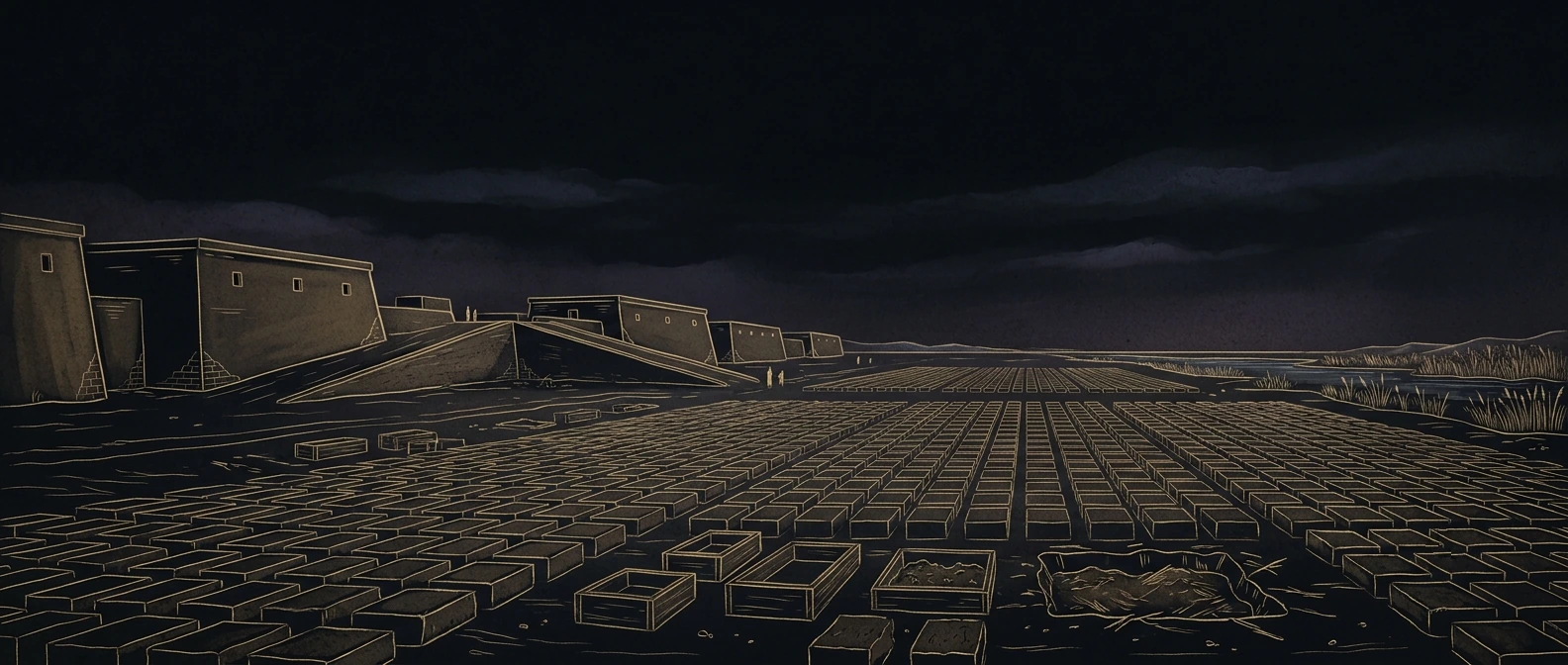
Egypt in the late Bronze Age was the greatest power in the region, and it built with conscripted labour. Semitic-speaking people lived in the eastern delta in numbers, some enslaved, some in service, a few risen high. Store cities, brick quotas and daily tallies are the ordinary furniture of Egyptian administration, and the opening chapters use that vocabulary exactly.
The book never names its pharaoh, which is the first difficulty for anyone trying to date it. The conventional window is the thirteenth century, under Rameses II, largely because the story names a city that bears his name. Around 1208 BCE a victory stele of his successor Merneptah lists Israel among the peoples of Canaan, the earliest mention of Israel anywhere outside the Bible.
The harder thing to say plainly is this. No Egyptian record mentions the departure, and Egypt kept careful records. Nothing has been found in Sinai from a mass migration, and the archaeology of Canaan points to Israel emerging largely from within it rather than arriving from outside. What the book gives is not a report. It is a founding charter, told and retold by people who believed that a deliverance had happened and who understood themselves by it.
It reached its final shape centuries after the events it describes, from more than one source, among people for whom empire was the permanent condition. That is worth holding while reading. A story about walking out of an empire was carried, and finally written down, by people living inside one.
- c. 1279–1213 BCE
- Rameses II builds extensively in the eastern delta, including a city bearing his name.
- c. 1208 BCE
- The Merneptah stele names Israel as a people in Canaan: the earliest mention outside the Bible.
- c. 1100s BCE
- The Song at the sea, in archaic Hebrew, is among the oldest poetry the book preserves.
- 700s–500s BCE
- The prose traditions are written down and combined, more than one voice kept side by side.
- 586 BCE
- Jerusalem falls and the exile begins. A story about leaving an empire is now read from inside one.
- The midwivesExodus 1 · Three scenesNarrative
- The basket, and the flightExodus 2 · Three scenesNarrative
- The bush and the nameExodus 3 · Three scenesNarrative
- Signs, and the bridegroom of bloodExodus 4 (selected) · One sceneNarrativeGrounded
- Bricks without strawExodus 5 · Three scenesNarrative
- I am the LORDExodus 6 (selected) · One sceneNarrativeGrounded
- The plaguesExodus 7–11 (selected) · Five scenesNarrative
- PassoverExodus 12 (selected) · Two scenesNarrative
- The firstborn, and the pillarExodus 13 · One sceneNarrativeGrounded
- The seaExodus 14 · One sceneNarrative
- The Song at the seaExodus 15:1–21 · One scenePoetry
Getting out was the easy part, and it took ten signs and a sea. What follows is harder to dramatise and takes longer: three days to the first bad water, a month to the first hunger, and a stretch of country where the only question that matters is whether there is anything to drink tomorrow.
This is where the people stop being an audience to their own rescue and start having to live on it. They are given bread that cannot be stored, a day in the week when gathering is pointless, and a foreign priest who tells their leader he is doing it wrong. None of it looks like the sea. All of it is the training for the mountain.
Movement 2 · Exodus 15:22–18The road to the mountainThree days past the song the water is bitter, and the rest of the way is learning to live on what arrives. Bread for a day, a day for rest, and a foreigner who says plainly that this is not working.+
The ground beneath the road to the mountainThe situation+
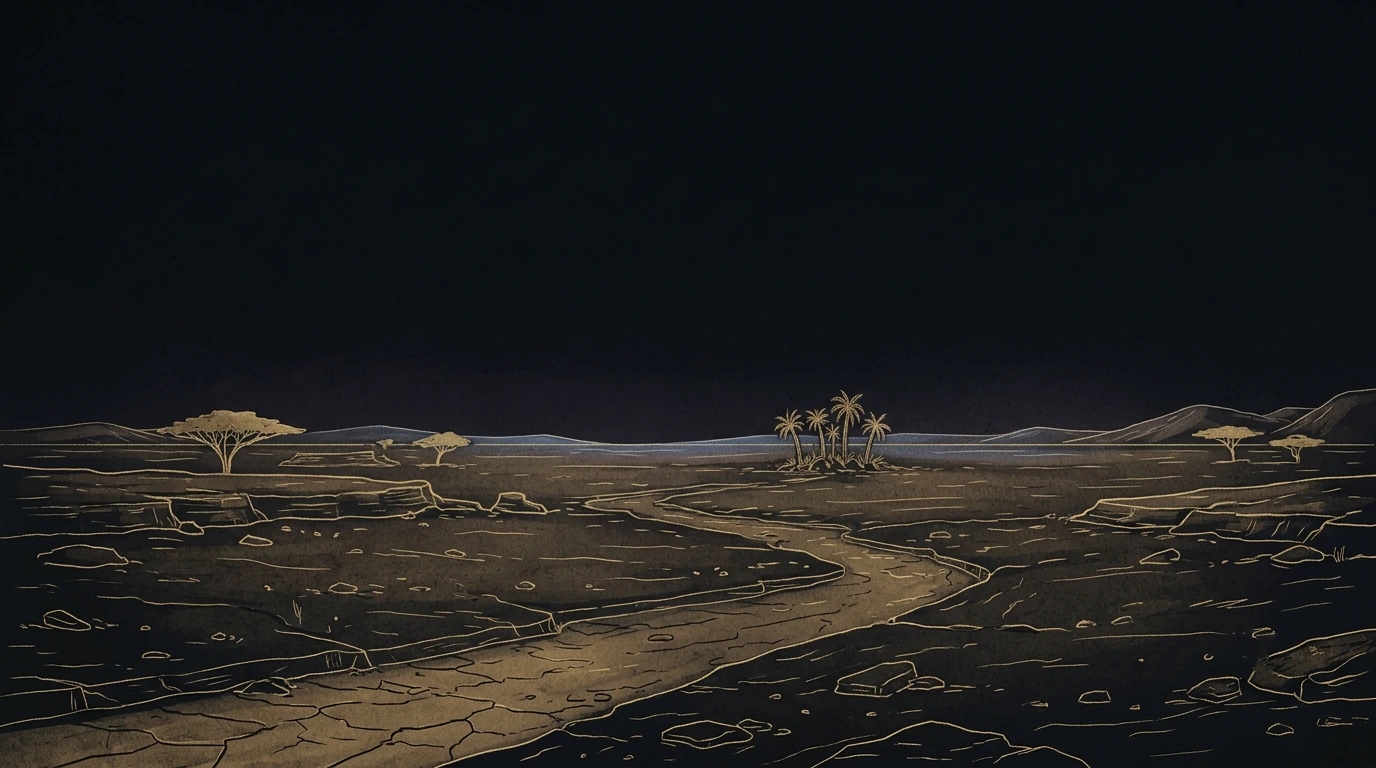
The country between Egypt and Sinai is limestone, gravel and wind, and the whole problem in it is water. Springs are days apart and a bad one ends a march. The itinerary the book gives, Marah, Elim, the wilderness of Sin, Rephidim, reads like a real route, though almost none of the places can now be located with any confidence and the mountain itself is not securely identified.
These chapters work differently from the ones before them. Each stop follows the same shape: a shortage, a complaint, provision, and then something that outlasts the crisis. A day's portion and no storing. A seventh day taught by the way bread behaves. Judges appointed over thousands and tens. The rescue is finished and what is being built now is a way of living, which is why the wilderness material teaches more than it narrates.
One thing is worth naming plainly before the mountain. The man who gives Israel its first working system of justice is a Midianite priest, and he is welcomed, fed and listened to, several chapters before any covenant exists. Whatever the law is going to mean, the book has already established that this God was recognised from outside before he was codified from within.
- Bitter waterExodus 15:22–27 · One sceneNarrative
- Bread for the dayExodus 16 (selected) · Three scenesNarrative
- The rock, and AmalekExodus 17 · Two scenesNarrative
- JethroExodus 18 · Two scenesNarrative
They have been rescued, fed, watered and organised. What they have not been given is terms. The next stretch is the mountain, and what comes off it is not another rescue but a document: ten sentences, then a long code of case law about oxen and debtors and daughters.
It is the part of the book most readers skip and the part its own people built a nation on. Some of it will still make a claim on you. Some of it plainly will not, and is worth seeing anyway, because a book that hides its hardest pages is not being trusted with anything.
Movement 3 · Exodus 19–24The covenantA people who have been rescued are offered terms, and agree to them before they have heard what they are. Then the terms arrive: ten sentences out of the fire, and a long code of case law that is still argued over.+
The ground beneath the covenantThe situation+
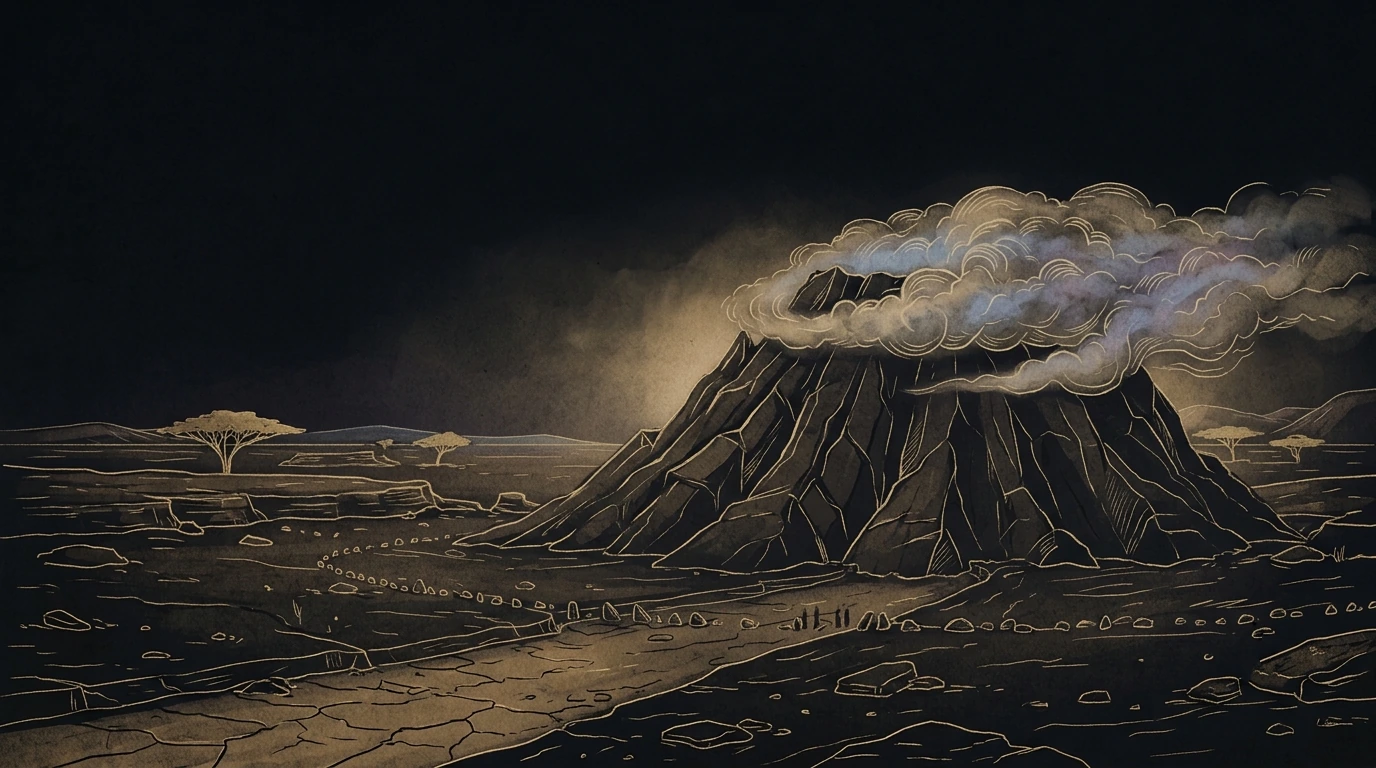
The mountain cannot be located with any confidence, and it matters less than the shape of what happens on it. The covenant at Sinai is built like a treaty of its period between a great king and a lesser one: the king named, what he has already done for the lesser party recited, then the terms, then witnesses and consequences. Israel took the diplomatic form of its world and put God in the position of the great king, which is a claim about who they now belonged to rather than a literary borrowing for its own sake.
The law itself sits inside a much older legal tradition. Codes from Mesopotamia predate this one by centuries and share its case-law grammar, the long run of sentences beginning if a man. Comparison shows both the borrowing and the divergence. This code is markedly more protective of the debtor, the foreigner and the servant than its neighbours, and it values a person above property in places where they did not. It also permits a person to be owned, which no comparison softens.
These chapters were edited over a long time and the seams are visible. The ten words appear twice in the Bible, here and in Deuteronomy, and the two do not match: the reason given for the sabbath is creation in one and slavery in Egypt in the other. Both were kept. That is characteristic of how this book handles its own traditions, and it is worth knowing before reading a code that later readers have often wanted to be seamless.
- Fire on the mountainExodus 19 · Three scenesNarrative
- The Ten WordsExodus 20 · Three scenesComposite
- Persons, and what they are worthExodus 21 (selected) · Three scenesLaw
- The foreigner, the widow, the debtorExodus 22–23 (selected) · Two scenesLaw
- Blood on the peopleExodus 24 · Two scenesNarrative
The terms are agreed and sealed, and Moses goes up the mountain for forty days. What he is given there is not more law. It is a set of building plans, in cubits, for a tent with poles through rings so that it can be carried.
This is the last movement, and it is the one that says what the rescue was for. Not a law and not a land, in the end, but an arrangement for the God who did all of it to live among the people it was done for. It goes badly wrong first.
Movement 4 · Exodus 25–40The presenceA tent, a failure, and a rebuilding. The God who refused to be seen arranges to be carried, the people break the covenant before the plans are finished, and the book ends with a cloud settling on a tent nobody can enter.+
The ground beneath the tabernacleThe situation+
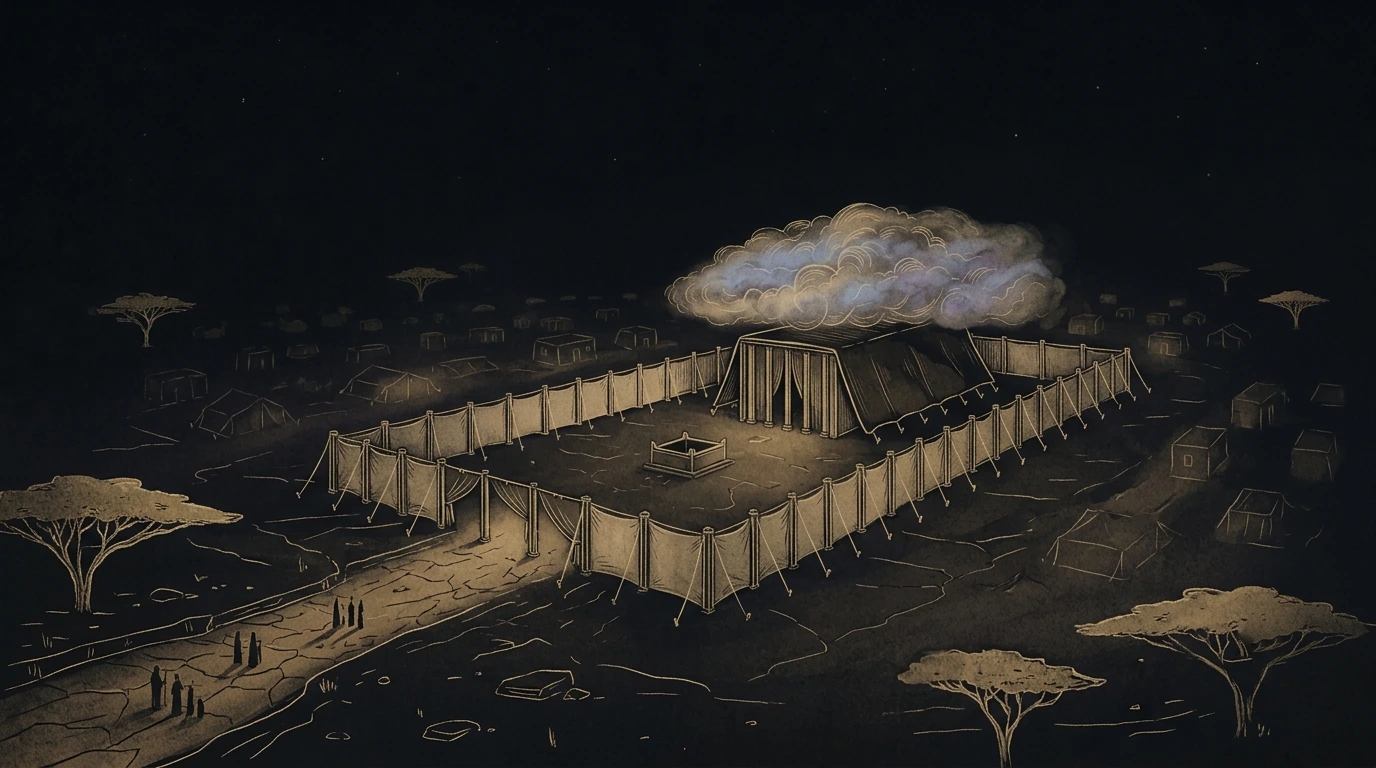
The first thing to say is about proportion, because it is the question every reader arrives with. The creation of the world gets thirty-one verses. A tent gets around four hundred, twice over. Read as a story that is badly out of balance. Read as what the book is actually for, it is the argument itself: the point of the rescue was never the leaving, it was that this God would end up living among these people, and the specifications are how that gets arranged. Detail is what care looks like when it is written down.
What is being described is a portable shrine, and portable shrines are known elsewhere in the region, in Egypt and among nomadic peoples. The design is less exotic than it reads. A frame, curtains, an enclosure, a graded approach from courtyard to inner room. What differs is what sits at the centre, which in other sanctuaries would be an image of the god and here is a box with the terms of an agreement inside it and an empty space above.
Most scholars read these chapters as the work of priestly writers, giving the tabernacle a plan that closely matches the later temple in Jerusalem, which is either the temple projected backward onto the wilderness or the tent that the temple was built to imitate. The answer is not recoverable and the effect is the same either way: a people who had lost a temple were handed a description of a sanctuary that could be packed up and carried, which is a pointed thing to give exiles.
- The patternExodus 25–27 (selected) · Three scenesNarrative
- The priest, and the craftsmanExodus 28–31 (selected) · Four scenesNarrative
- The golden calfExodus 32 · Three scenesNarrative
- Show me your gloryExodus 33 · Three scenesNarrative
- The second tabletsExodus 34 (selected) · Three scenesNarrative
- Just as the LORD had commandedExodus 35–40 (selected) · Six scenesNarrative