Ecclesiastes
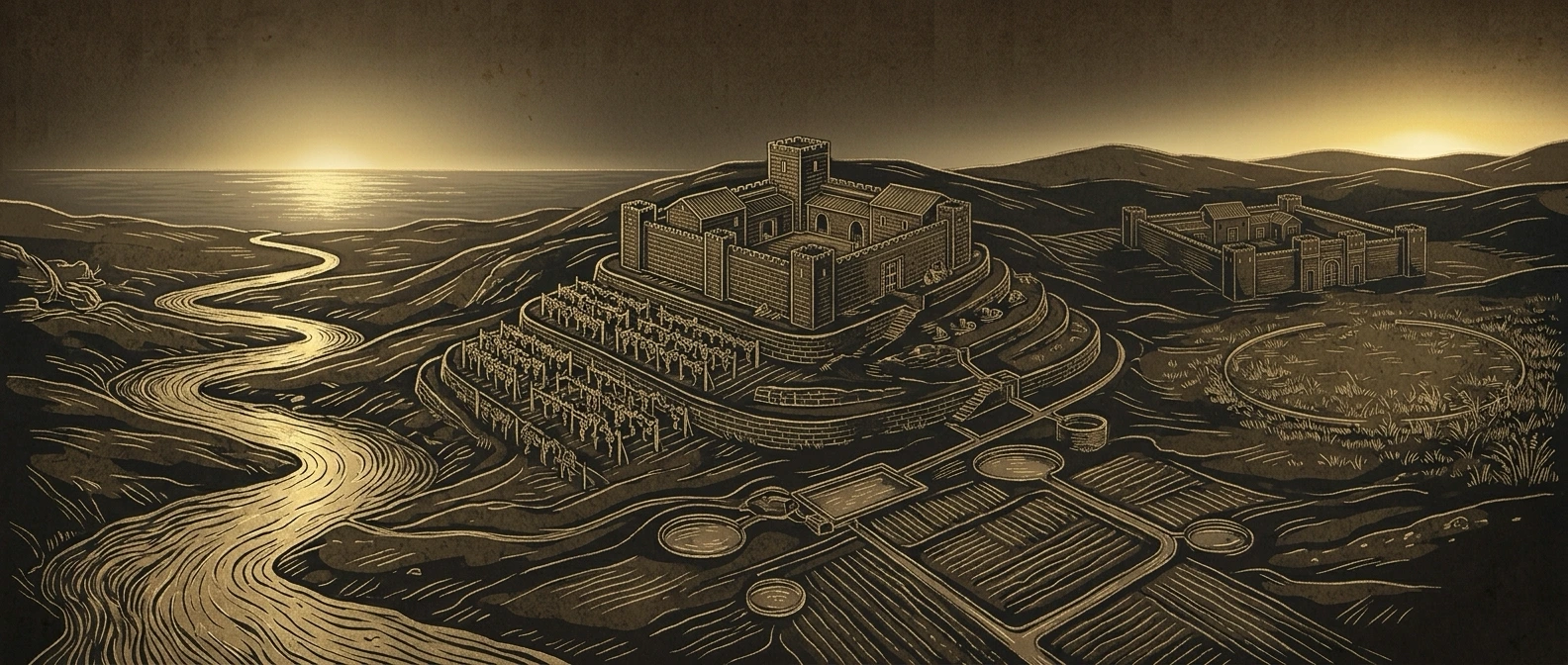
Three movements: under the sun, what cannot be found out, eat your bread.
An introduction · Ecclesiastes 1–12The book that argues with the rest+
Ecclesiastes is twelve chapters and 222 verses, and it is the strangest thing in the Hebrew Bible. It speaks in the first person, calls itself Qoheleth, which is a role rather than a name, and presents itself as a king in Jerusalem, which points at Solomon without ever saying the word. It abandons that pose after chapter two. Its Hebrew is late and carries Persian loanwords, which places the writing several centuries after any Solomon, most likely in the Persian period.
What it says is why it is remarkable. That the dead know nothing and have no further reward. That a man has no advantage over a beast, since both go to the same place. That he has seen a righteous man perish in his righteousness and a wicked man live long in his wickedness. These are not marginal remarks made in passing. They are the argument, and they contradict things said elsewhere in the same collection.
It nearly did not survive the cut. Ancient discussion records real dispute about whether it belonged, and the objection was exactly the one a modern reader raises: that it contradicts itself, and that it could be read as heresy. The six verses at the end, in a different voice, praising the Teacher from outside his own book and closing on fear God and keep his commandments, are widely read as the frame that made it keepable. Whether that is a later hand or the author signing his own work is genuinely argued.
And it is not, in the end, a book about despair, however often it is quoted that way. Six times it stops to say the same thing. Eat your bread. Drink your wine. Enjoy your work. Be with the person you love. It grants that permission on the basis of the bleakness rather than in spite of it, which is a harder thing than optimism and a good deal more use.
- c. 950 BCE
- Solomon, whom the opening verses point at without naming him.
- c. 450–200 BCE
- The window most place the writing in, on the evidence of the language.
- c. 200 BCE
- Ben Sira writes, and the wisdom tradition this book argues inside is well established.
- 100s CE
- Rabbinic discussion records real dispute over whether the book belonged in the collection at all.
Movement 1 · Ecclesiastes 1–4Under the sunA man with every resource available sets out to find what a life adds up to, and reports back honestly. The answer he keeps arriving at is vapour, and the first thing he does with it is tell you to eat your bread.+
The ground beneath the sunThe situation+
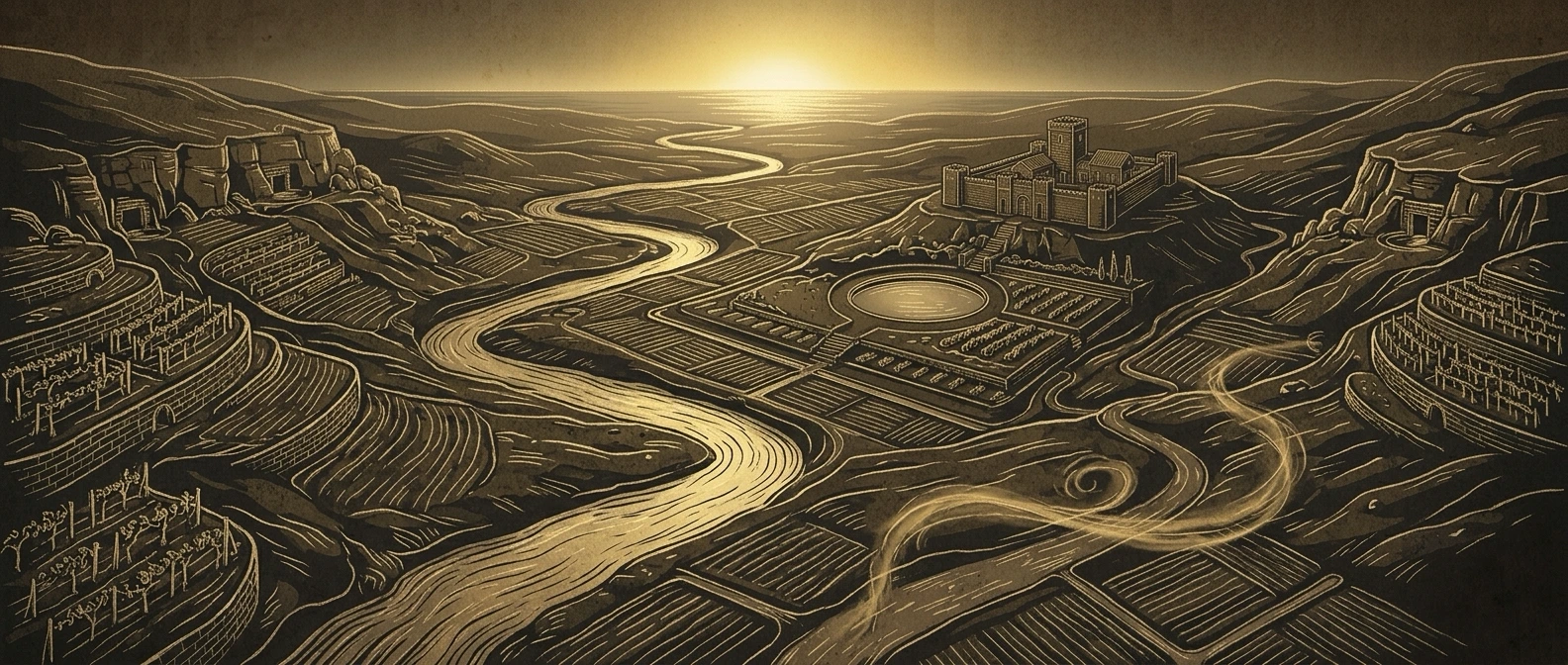
Under the sun is the book's own phrase, used around thirty times, and it marks the boundary of the enquiry. It means the world as anyone can observe it, with no appeal to anything outside it. That is a deliberate limit rather than an oversight, and everything the book concludes is concluded inside it.
Wisdom writing was an international trade. Egypt and Mesopotamia produced instruction texts and sceptical dialogues for centuries, and some of them sound startlingly like this one: a man arguing with his own soul about whether living is worth it, or a servant agreeing with every contradictory thing his master proposes. Israel's contribution sits inside that conversation rather than apart from it.
And what Proverbs claims is the thing this book is testing. Proverbs offers a world that works: diligence produces plenty, righteousness produces long life, folly produces ruin. Ecclesiastes reports the exceptions and then refuses to treat them as exceptions. Job does the same from a different direction, with one man's case instead of a survey.
The economic detail is real too. Chapter 5 describes officials watching officials, absentee owners, and wealth that cannot be slept on. That is the world of a small province inside a large empire, where the money and the decisions are made a long way off.
- Nothing new under the sunEcclesiastes 1 · Two scenesComposite
- I denied myself nothingEcclesiastes 2 · Three scenesLetter
- A time for everythingEcclesiastes 3 · Three scenesComposite
- The tears of the oppressedEcclesiastes 4 · Two scenesLetter
The first movement asked what a life adds up to and answered vapour, interrupting itself three times to say eat your bread anyway.
What follows narrows. Money, worship, power, the man who has everything and cannot enjoy it, and then a long collection of sayings about what is better than what. It closes by admitting, three separate times, that nobody can find out what is actually being done under the sun, however confidently the wise claim to have looked.
Movement 2 · Ecclesiastes 5–8What cannot be found outMoney that will not fill anyone, a man denied the ability to enjoy what he has, a collection of sayings about what is better than what, and the repeated admission that nobody can find out what is done under the sun.+
The ground beneath the searchThe situation+
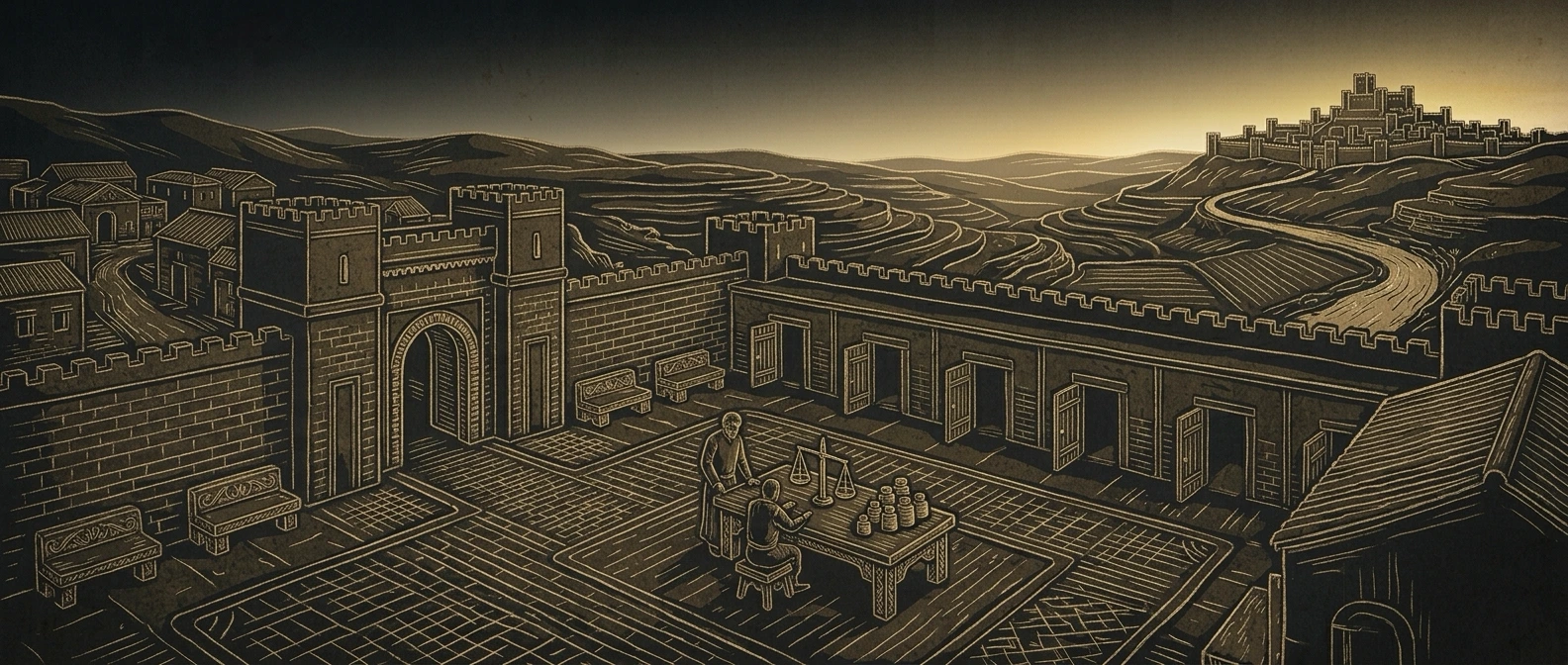
The world of chapter five is a province inside an empire. One official watched by a higher one, and higher ones over them, is the administrative reality of Persian-period Judah: a small territory whose taxes and decisions travelled a long way off. The book offers that chain as a reason not to be astonished by injustice, which is a bleak sort of realism rather than an endorsement of it.
Money in that economy was silver by weight and land, not a number held somewhere safe. It was physical, on the premises and vulnerable, which is why the observation that a rich man cannot sleep is literal rather than figurative.
Vows were binding transactions with a real institution. A person promised something to God in exchange for something wanted, and the law took a broken vow seriously. When the book says do not tell the messenger it was a mistake, the messenger is somebody who has come to collect.
And the movement's title is the book's own claim, made three separate times in chapter eight. However hard a person works at it, and however confidently the wise say they have it, nobody can find out the work that is done under the sun. That is a limit on knowledge, stated by somebody who went and tried.
- Your lotEcclesiastes 5 · Three scenesLetter
- A stranger will enjoy themEcclesiastes 6 · Two scenesLetter
- Better thanEcclesiastes 7 · Two scenesComposite
- Nobody can find it outEcclesiastes 8 · Two scenesLetter
Eight chapters of looking, and the finding is that the looking does not finish. What follows does not solve that. It stops trying.
The last four chapters hold the bleakest sentence in the book and the most direct instruction in it, four verses apart. Then a second collection of sayings, a poem about a house falling into disrepair that is really about a body, and six verses in a different voice that somebody added at the end.
Movement 3 · Ecclesiastes 9–12Eat your breadOne fate for everyone, and then the most direct instruction in the book, four verses later. Go. Eat. Drink. Wear white. Love somebody. Do the work with your might, because the days are few.+
The ground beneath the answerThe situation+
Sheol is not hell. In the Hebrew Bible it is the grave, the place of the dead, and it is characterised by inactivity rather than by punishment: no work, no planning, no knowledge, no wisdom. When this book says the dead know nothing, that is what it is describing, not making a claim about judgement, and the hope that grows later in the collection is a development rather than a correction.
White garments and oil on the head were what people wore to a feast. Telling somebody to wear them always is telling them to dress for a celebration on an ordinary day, which is a stronger instruction than it looks in English.
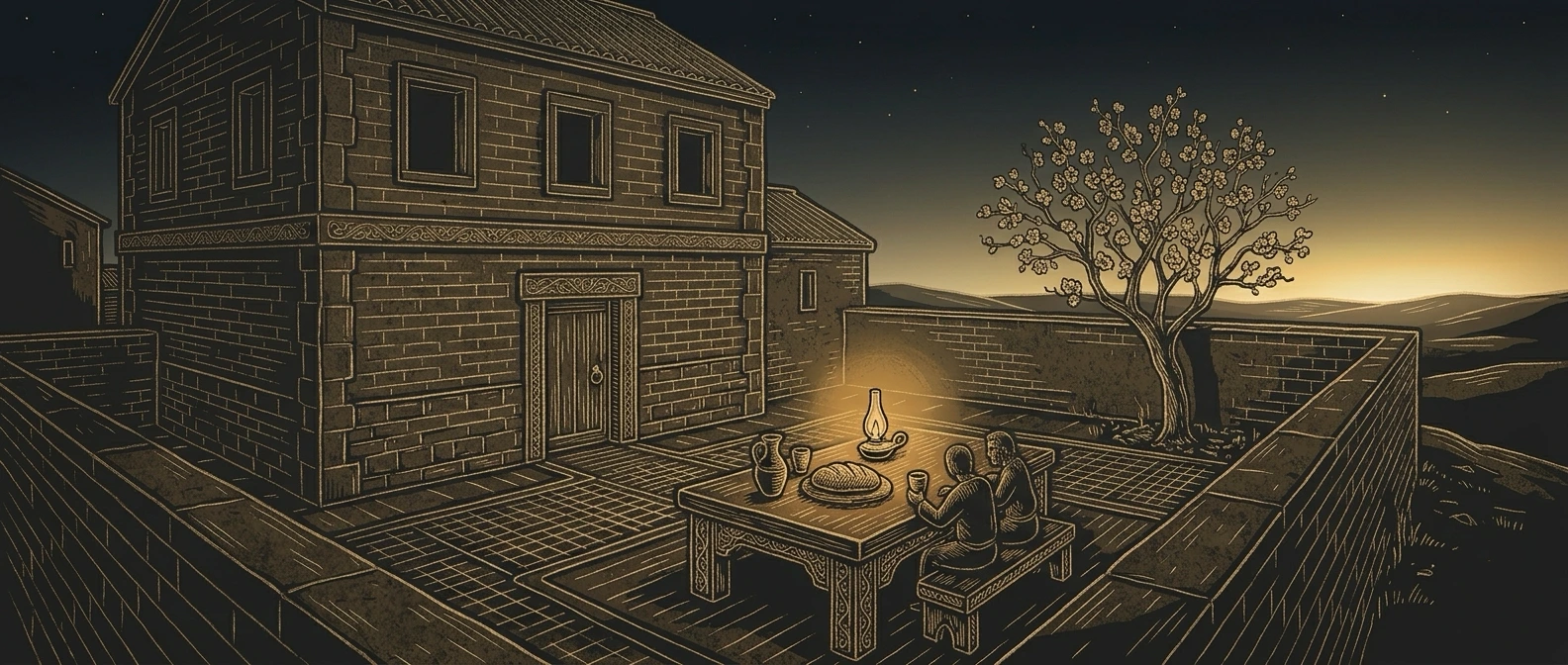
The permission that has appeared five times so far arrives here in the imperative, for the only time in the book. Go, eat, drink, let, enjoy, do. This is the one stretch of Ecclesiastes that gives orders.
And the closing poem's imagery is drawn from a household. The keepers of the house tremble, the strong men stoop, the grinders cease because they are few, those looking through the windows grow dim, the door to the street is shut. Readers have decoded it line by line as an anatomy of aging, and it works as one. It also works simply as a house running down, which is what the poem actually describes.
- Go, eat your breadEcclesiastes 9 · Three scenesLetter
- A little follyEcclesiastes 10 · One sceneWisdom
- Remember your CreatorEcclesiastes 11:1–12:8 · Two scenesComposite
- The epilogueEcclesiastes 12:9–14 · One sceneLetter